
Why Writing Feels So Unnatural
Relax, it's not just you

About a month ago, my girlfriend sat down with a well-known Melbourne-based graphic designer, interviewed him and planned to write a profile.
She headed out of the door that morning with the whole veteran journalist toolkit: a reporter’s notepad, a voice memo app and a Montblanc pen while dressed in all black.
The interview, according to her, was a 2-hour-long treasure trove for aspiring graphic designers. They talked about design theory, workflow, taste and why it’s perfectly normal to get mad at your dinner table’s horrible design at 9 pm.
I became more and more invested in the profile as she raved about it over dinner at her place. ‘When can I read it?’ I said, ‘It sounds like an incredible article.’
‘Well…’ she looked over at her laptop on the other side of the room, ‘I was wondering if I could get your advice on that…’ As it turned out, conducting a successful interview is one thing, but writing it up is a whole other story.
In my girlfriend’s case, even a set-in-stone transcript couldn’t save her from chewing her knuckles in front of a blank page.
What followed was an hour-long brainstorm over a bottle of wine, and we kept coming back to the same problem:
Writing is uncomfortable because it feels unnatural, yet we keep thinking that it should be natural.
Steven Pinker wrote about this in his book, The Sense of Style. He explained that the human mind doesn’t think in linear terms.
‘As you wordlessly daydream, your thoughts drift from idea to idea: visual images, odd observations, snatches of melody, fun facts, old grudges, pleasant fantasies, memorable moments… (p.79)’
In other words, writing is essentially forcing all of that wordless daydream into a linear row of ducks. In my girlfriend’s case, she has to find a linear story through a jungle of obscure graphic design talk, and of course,
‘It’s not easy to design a code that can extrude a tangled spaghetti of concepts into a linear string of words (p.81).’
In short, writing is all about codifying non-linear thinking into linear sentences, and contrary to the popular advice of just write from your heart, it is an incredibly difficult process.
But the silver lining here is that once you’ve mastered this code, you can write about anything you want with ease without ever getting writer's block.
This code comes in 4 parts:

They build on each other like a pyramid. You have to understand basic grammar rules before you can worry about style, and you have to master style before you advance to coherence & rhetoric. In fact, all of our writing difficulties can be traced back to screwing up some parts of this pyramid.
In my girlfriend’s case, though she’s proficient in grammar & composition, I can tell that she struggles to express herself in her unique style. And when I was in academia, though a lot of my peers were coherent writers, they struggled to bring their sentences to life with rhetorical devices.
And this is what we’ll work on for the next few months, and the end goal is for you to write about any idea you want on command without ever pausing in front of a blank page.
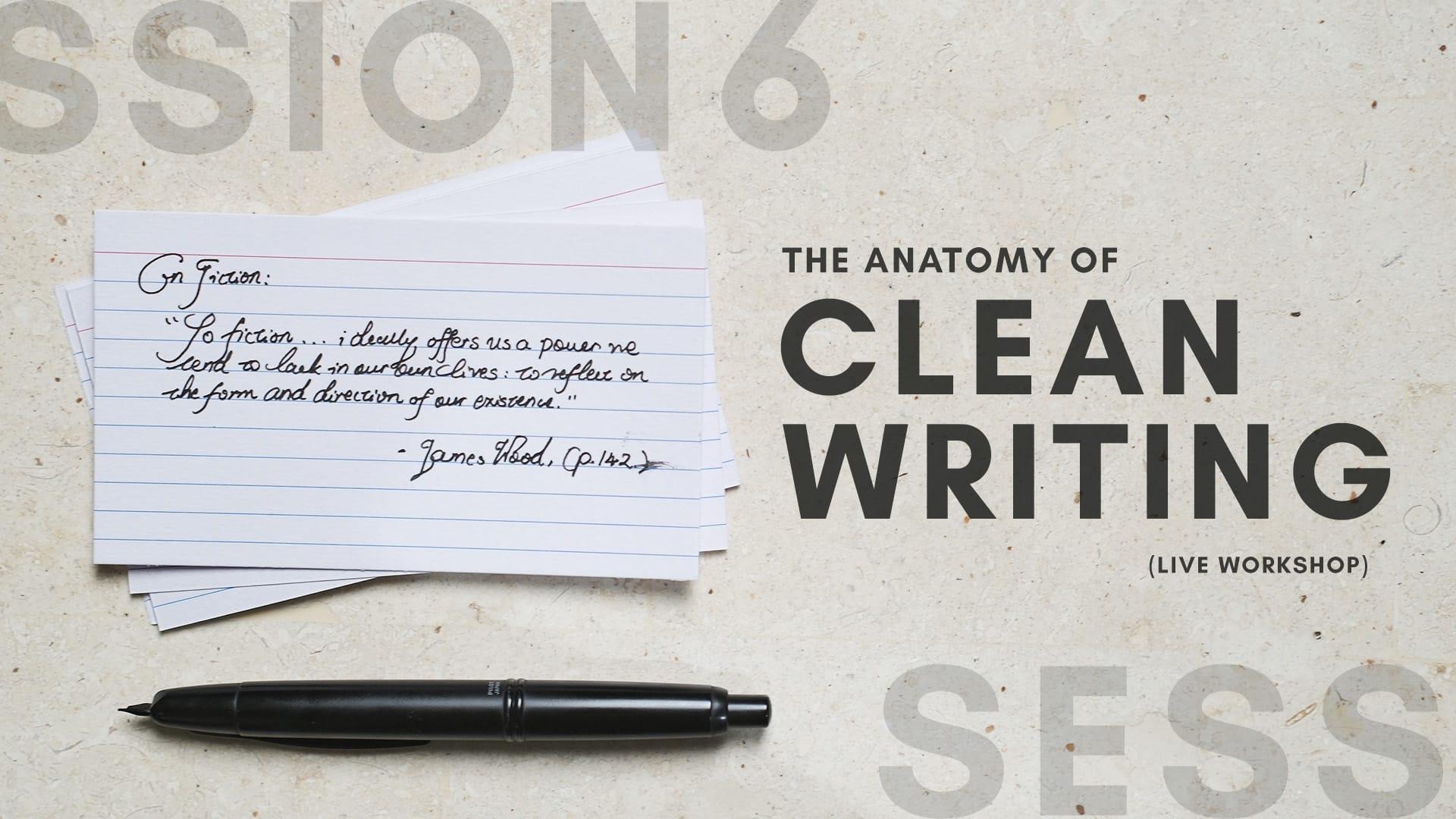
If you’re excited, I’ve put together a workshop that covers all these basics called ‘The Anatomy of Clean Writing’. This is the perfect primer for you to get started in the art of writing and thinking clearly.
In addition, I’m also developing a short course on writing micro-essays, and it’ll be released around August.
I believe that this art of thinking & writing is the last stand against AI, and I’m very excited to give you all the tools to set your best ideas on fire. For now, check out the workshop and
Until next week
Robin
7 core principles in grammar, style and rhetoric distilled into 7 lessons that'll change how you write forever
Member discussion