Why We Judge Books We've Never Read
(1) The Idea: Paranoid Reading
Two weeks ago, I published a letter on why reading goes beyond consumption. In its ultimate form, reading is a radical act of falling in love that allows you to see the world anew. This week, I want to outline a roadblock that prevents people from ever accessing this love of reading.
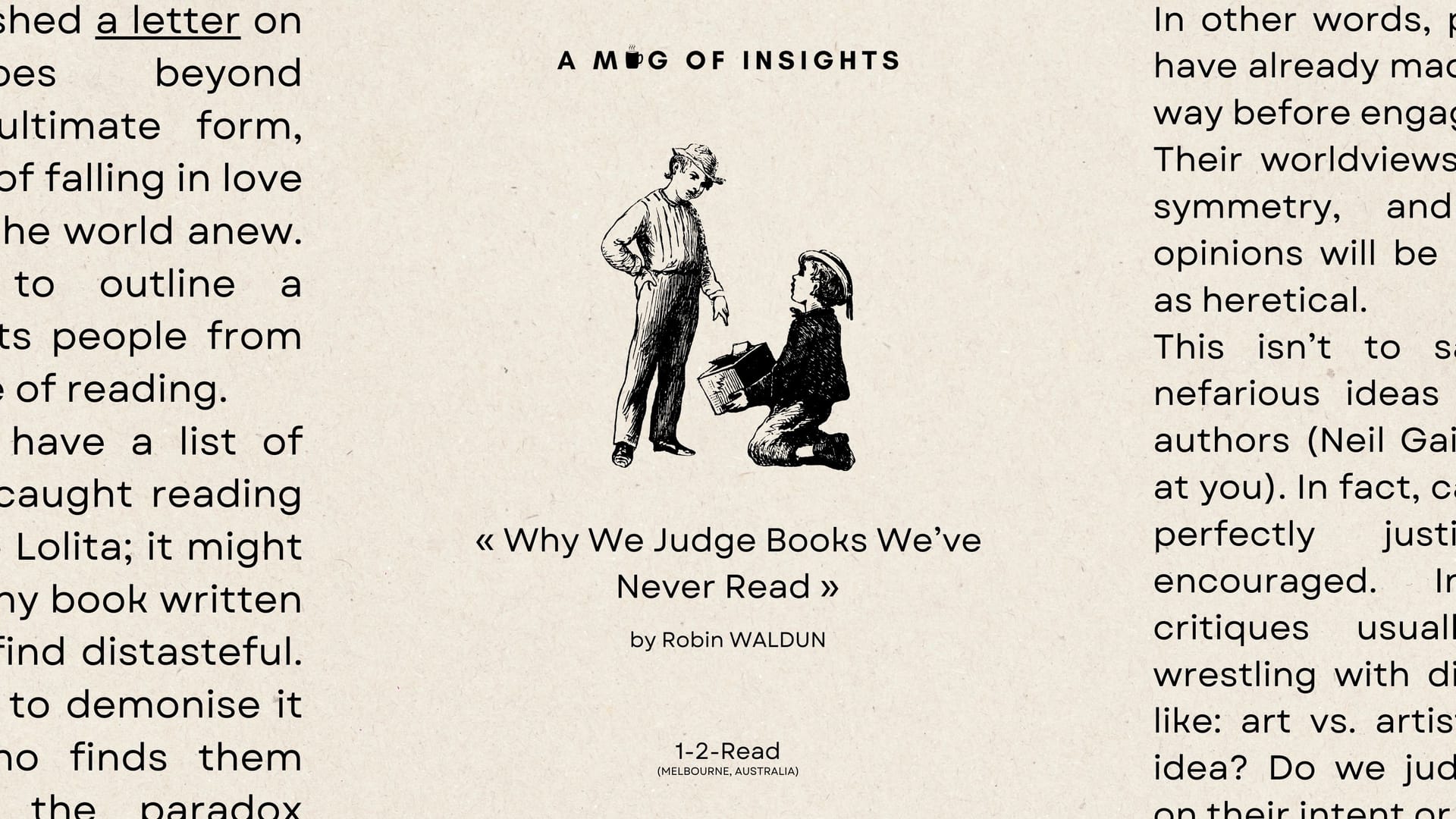
Now, we probably all have a list of books we’ll never get caught reading in public. This might be Lolita; it might be 12 Rules for Life or any book written by an author that you find distasteful. Our default reaction is to demonise it and judge anyone who finds them interesting. However, the paradox here is that the harshest critics have never read the book.
This is what the literary theorist Eve Sedgwick called: paranoid reading. In short, it’s an attitude towards reading that is defensive, vigilant and anticipatory. It assumes things about the author and the book through hearsay, and it’s convinced that it knows the author’s nefarious motives.
As Sedgwick writes in Touching Feeling:
“Paranoia is drawn towards and tends to construct symmetrical relations, in particular, symmetrical epistemologies (p 126).”
In other words, paranoid readers have already made up their minds way before engaging with an idea. Their worldviews are locked in a symmetry, and any differing opinions will be rejected or seen as heretical.
This isn’t to say there aren’t nefarious ideas or questionable authors (Neil Gaiman, I’m looking at you). In fact, calling them out is perfectly justified, if not encouraged. In fact, great critiques usually come from wrestling with difficult questions like: art vs. artist, what is a bad idea? Do we judge books based on their intent or impact?
However, most people judge before asking these necessary questions, and these reactions are merely ready-made opinions before they’ve ever engaged with the work. This creates the I know so much about a book I haven’t read, and critiques from this position are partial, inflammatory, and only sink the paranoid reader deeper in their locked worldviews.
Another way to look at this is through self-trust. Most readers have very little confidence in their ability to judge good ideas from bad ones, so they take the easy route of putting good and bad in strict categories to avoid the heartache of making mistakes. In contrast, high reading-esteem comes from pitching against two opposing views, contemplating them, and eventually arriving at a conclusion that goes beyond two extremes.
This process is what the psychoanalyst Melanie Klein called: the depressive position. Contrary to the wording, this position is an “anxiety-mitigating achievement” in Klein’s theory, and it allows us to repair partial ideas into a complete picture without being attached to extremes.
In other words, this is the process of reparative reading, and as you’ll see in the upcoming post on Monday, this is the key to being able to think in shades of grey.
(2) Reflections
1: Bring to mind a book you will not read and contemplate the reasons behind it. Could it be that you are afraid that you might get swayed? If so, how strong is your original position anyway? Don’t cast any judgments on yourself; we’re merely trying to get you to see paranoid reading in action.
2: Read 1 source from a publication holding an idea you disagree with. For most people (me included), this is a very emotional exercise. But do your best to observe your reactions: do you find yourself judging it as you’re reading it? Are you arguing with it in bad faith? Also, you don’t have to necessarily agree with the other side. The whole point here is to recognise how powerful this paranoid tendency is.
As I'm writing this now, A Mug of Insights is a 100% reader-supported newsletter, and your paid subscriptions make all the work I do possible.
So if this idea intrigues you, make sure to stick around for Monday's deep dive for Double-Shot members, where we'll build on the idea of paranoid reading and give you specific protocols for overcoming it.
Get a free email course with 7 proven techniques to improve comprehension, retain what you read, and engage more thoughtfully with any book:
Member discussion