
The most painful year of my life
How a humiliating rejection became the best thing that ever happened to my writing
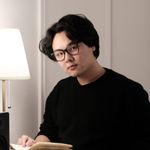

The truth is: I’m a private person.
For almost 10 years, I’ve been making a living educating people.
Yet, I rarely tell people about my life in my videos/writing.
I’ve assumed the role of a teacher who disappears after school days.
But that's not going to fly anymore.
And today, I want to talk about one of the most painful moments of my life.
This was back in 2024.
My entire life was on a nice track.
I’d graduated from my honours year studying what I loved: literature.
I had straight-A grades and sparkling recommendations. And I even had an endorsement from a renowned academic I cited in my thesis.
And the next step looked clear: I was going to begin a PhD and teach literature for a living.
I embraced the long hours, the monastic life and the shaky academic job market because I loved what I do.
Then, I poured my heart into my PhD application. I wanted it bad, and I checked my email all the time, hoping for that: congratulations.
Then, the email arrived in December.
It began with: we appreciated the effort.
I was sitting in a hotel lobby with my girlfriend. She didn’t even need to know what was in that email before she grabbed my hand:
‘Let’s go for a walk’.
It was the longest walk of my life.
We didn’t say anything to each other, because with every step, I had to shed off pieces of the last 5 years of my life.
I had to shed off my favourite spot in the campus courtyard because I won’t be going back for a while.
I had to shed off that chair in that one café. I used to dream about growing old while marking my students’ assignments there.
And worst of all, I realised what I had lost:
My love for reading.
Academic life has drained all my energy. I was sick of those long hours and stiff ideas.
And with this news, I had to move back to my parents’ spare room.
If you’ve seen the video: ‘I was rejected from my PhD’, yes, I filmed it in that spare room.
The bookshelves were empty.
There was a bed and a desk and a broken dream.
Yet, I still had one thing left.
During the months following my rejection, I wrote in my notebook every day.
I tried to figure out what went wrong: grades? My attitude? My network? My ideas?
Then, on a Saturday afternoon, it all hit me:
I wasn’t upset about the rejection.
I was upset about how far I’ve wandered away from my path.
Since 2019, my work had one purpose: to help people with my ideas.
Yet, academia had nothing to do with all that.
The ideas were outdated junk cloaked in fancy words.
The academic politics were all about fighting for scraps.
Without knowing it, the academy swallowed me into a game I never wanted to play.
And the only way to move forward is to return to my first principle:
To revive the pleasure and the joy of reading/writing in as many people as possible.
My journal entries slowly changed into reading lessons.
I imagined that I was writing to an overwhelmed first-year student.
I imagined an accessible guide that'll teach people all they need to know about reading.
And imagined what studying literature would look like if we threw away all the fancy words.
It worked.
My writing/videos started doing well again.
People loved the new reading techniques and wanted me to go into more length.
And this is when I got another email that opened up a new chapter:
Subject: Expression of Interest
Body: Dear Robin Waldun. I am the senior publisher at Bloomsbury Academic, and I’m writing to you to see if you’re interested in working on a book-length project with us.
There I was, a few months into the year, buying a ticket to London to write a book.
After 22 hours of flying from Melbourne to London, I walked to Bloomsbury’s office in Bedford Square.
It was my birthday, and it was a rare sunny day in London.
I sat down with my publisher at a Greek restaurant and started talking about the book.
After 2 hours of working through my scattered notes and a tedious proposal, we had the first outline of the book.
And the goal was clear: to help intimidated readers find the pleasure and the joy of reading.
My publisher then brought the idea to Bloomsbury Publishing’s board. A month later, I signed the contract.
I had turned 24, and I had a book deal with Bloomsbury.
What followed was 2 years of gruelling work.
It was hard, because I didn’t want this book to be like all the boring guides on reading.
No, I wanted real stories and techniques from the best readers I knew.
So, I sought out people who were masters of their craft.
I flew to Oxford to see Ruby Granger and learned the most effective note-taking methods.
I wandered the streets of Paris to see Alice Cappelle to learn the best way to think about what we’ve read.
I consulted Parker Settecase for the best way around a difficult philosophy book.
I stayed up until 2 am to talk to Dr Jared Henderson about his worries around our attention crisis.
And I discussed the value of reading literature with Professor Rita Felski.
This book isn’t only a textbook on how to read.
It is an urgent call for us to develop the skills that are as old as civilisation itself:
Reading and writing.
These chapters will take you from my first day on campus to my last glance at the campus courtyard.
From the first novel I’ve read to the beauty of James Joyce’s prose.
From wandering into the basement of a library, to standing in front of Oxford’s Radcliffe Camera.
In short, it’s everything I’ve learned in the last decade.
And I am so proud of all the work we’ve put into it.
I want to thank the entire editorial team. They helped through the endless rounds of drafts, revisions, edits and typesetting.
And now, I’m excited for you to get your hands on it.
The book is now available for pre-order on Bloomsbury’s website here:
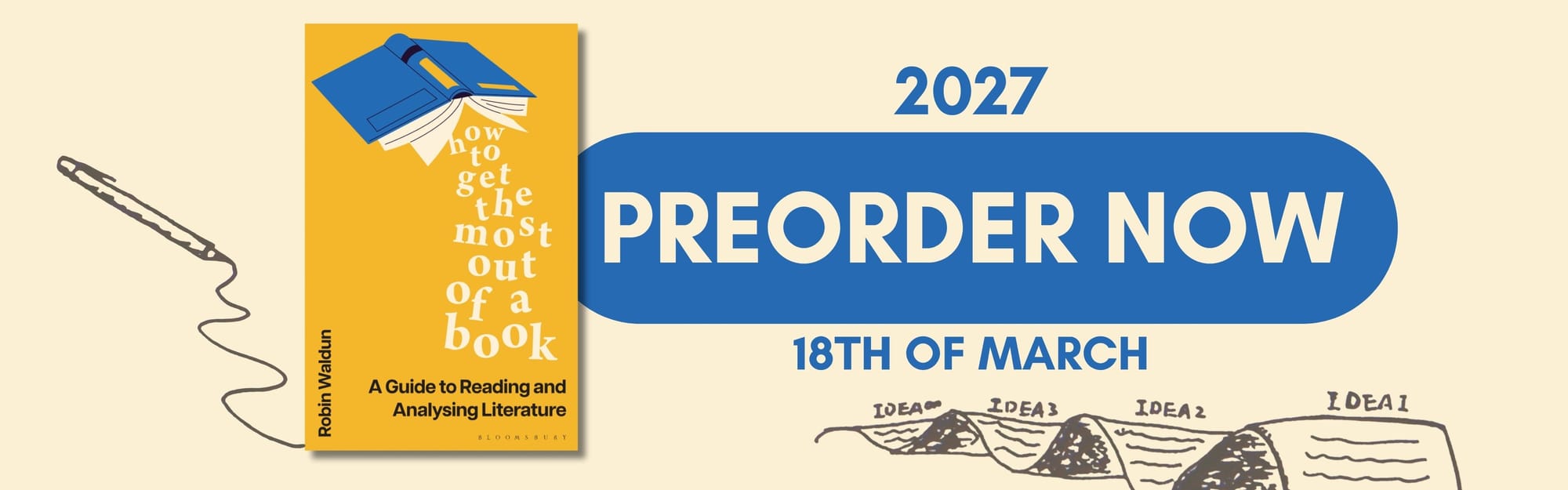
This book is only possible thanks to you: my reader.
I owe everything (including this book) to you.
And I hope that the insights in this book will change your life as they have changed mine.

Until next week
Robin
7 core principles in grammar, style and rhetoric distilled into 7 lessons that'll change how you write forever
Member discussion