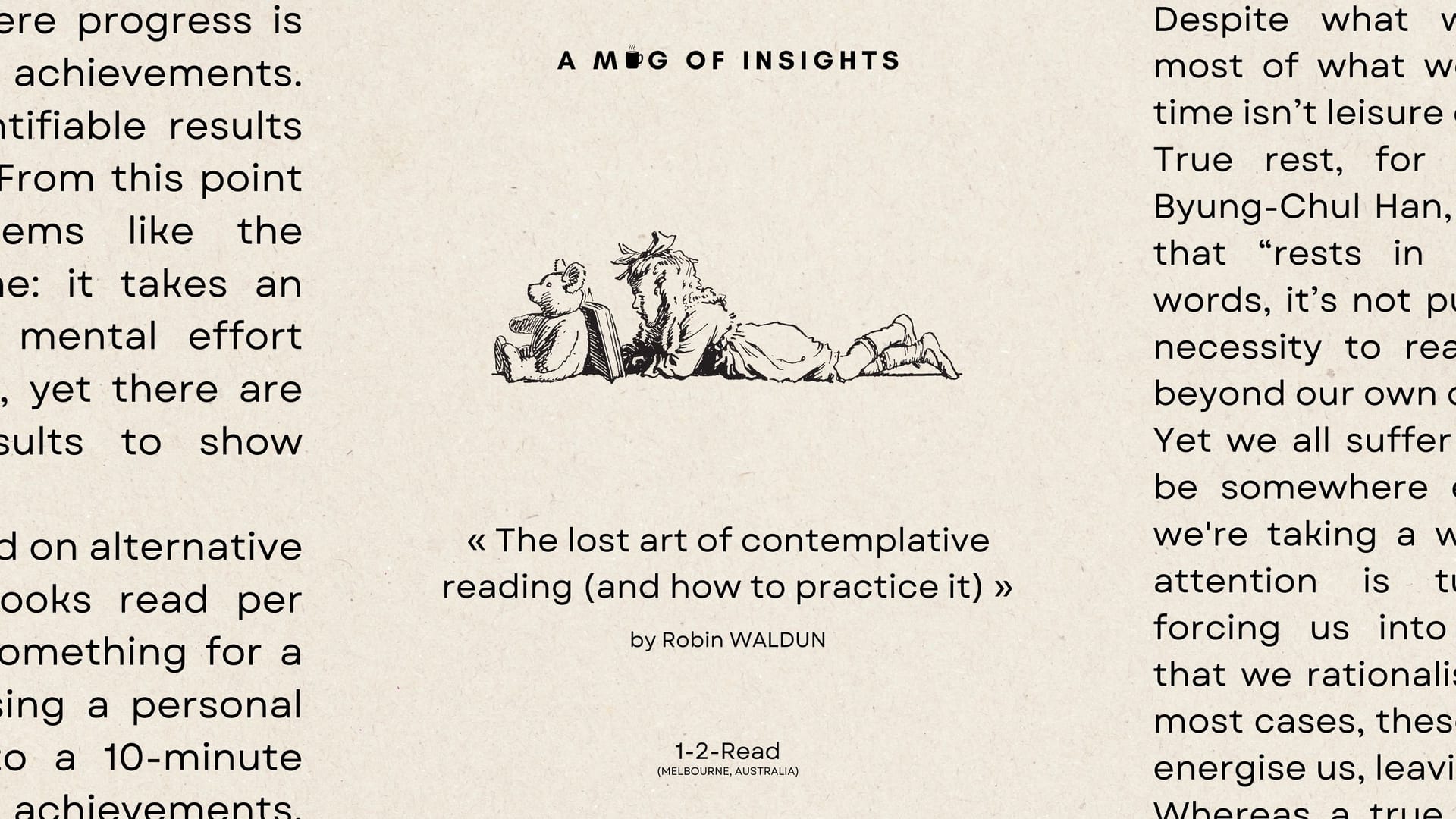
The lost art of contemplative reading (and how to practice it)
Reading has turned into projects, milestones and personal trophies in our world.
In universities, assigned readings are quantified.
On the internet, people only respond to how many books you’ve read.
And even when nobody’s watching, we still feel an immense guilt to finish more books.
These are all symptoms of us losing touch with an irreplaceable feature of reading: contemplative attention. This feature goes beyond achievement, and it denies clear metrics. It shies away from praise, but it’s as important as it is fragile in our distracted world.
So, in this Monday’s deep dive, I want to show you the power of this contemplative attention and give you some protocols to help you practice it.
0: Setting up the problem
We live in a world where progress is mainly measured in achievements. This means clear, identifiable results that we can show off. From this point of view, reading seems like the ultimate waste of time: it takes an incredible amount of mental effort and time commitment, yet there are no demonstrative results to show anyone.
This is how we’ve landed on alternative metrics: number of books read per year, racing to finish something for a book club, or condensing a personal development book into a 10-minute summary to maximise achievements. However, all these metrics have one common problem: they don’t give our minds the space to linger.
Whereas the sweetest moments of reading, in my experience, came from a different mind space. It happened when I wasn’t expecting to love a novel but found myself engrossed in it for weeks. It happens when you stumble upon a short story in a magazine that shattered your world, and it will happen when we let go of the need to finish a book like a project. When this happens, our minds are attuned to nothing but the page right in front of us, liberating a rare gap of contemplation in our busy lives.
Still, we find it hard to surrender to this contemplation completely, fearing that we’re secretly wasting our time. This fear, alongside our obsession with achievements, comes from a misunderstanding of leisure.
Subscribe to continue reading